

Care Package
Memory Care
Supportive care for memory changes, centred on the person.
Memory care at Kenny's Pond supports residents living with dementia, Alzheimer's, brain injuries, and related cognitive changes. The environment, routines, and programming are designed to help residents feel safer, calmer, more connected, and more understood.
You can ask early
A conversation can bring clarity.
If your family is noticing changes, you do not have to wait for a crisis to understand what support could look like.
Memory care
When memory changes become too much to manage at home, begin with a conversation.
Families often wonder if it is too early, too late, or the right time to ask for help. If safety, wandering, medication, confusion, nutrition, or caregiver exhaustion is becoming a concern, our team can talk through available supports and what daily life could look like in memory care.
Daily support
Structure, familiarity, and meaningful moments.
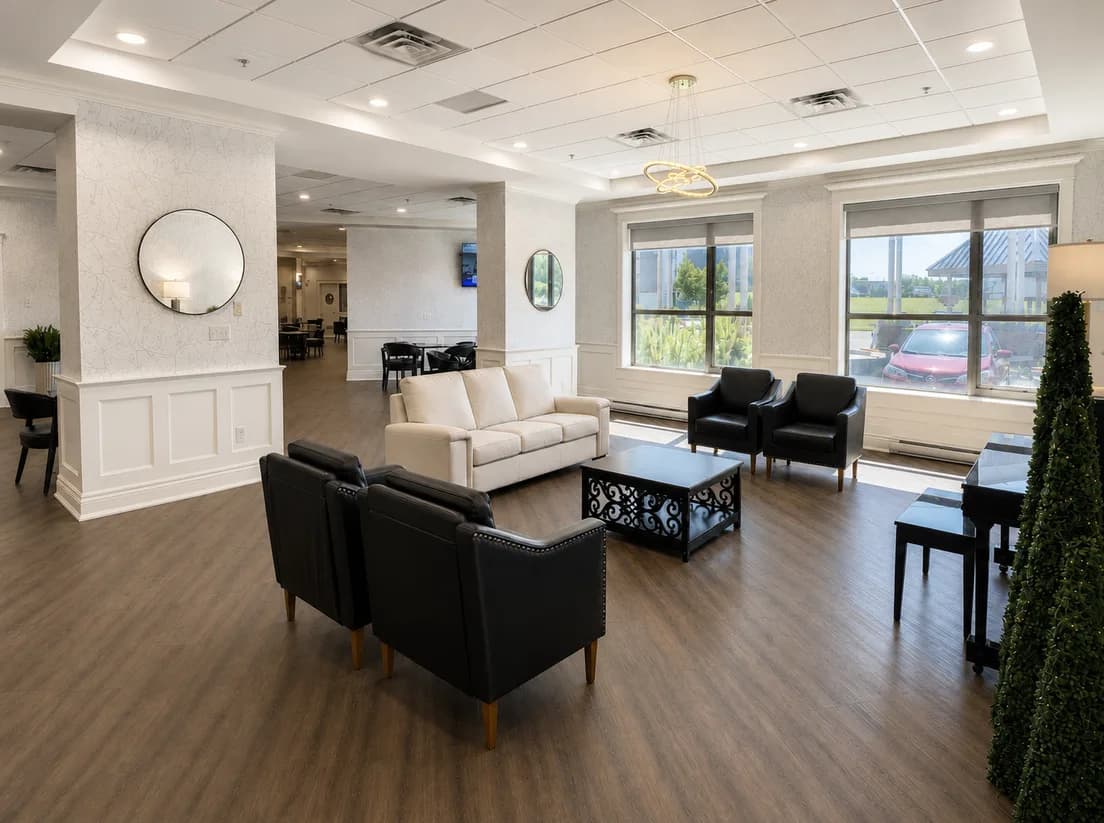
Memory care should protect the person, not simply manage the condition. Purposeful routines, social connection, recreation, meals, wellness support, and calm surroundings help residents move through the day with more comfort and confidence.
Questions families ask
Clear answers, before the next step.
How do we know when memory care is needed?
It may be time to ask about memory care when confusion, wandering risk, missed medication, unsafe routines, poor nutrition, social withdrawal, or caregiver exhaustion are becoming more frequent. A conversation with the care team can help clarify the next step.
What makes memory care different?
Memory care provides more specialized support for residents living with dementia, Alzheimer's, brain injuries, or related cognitive changes. The focus is safety, familiar routines, engagement, and quality of life.
Are activities available for memory care residents?
Yes. Programming should be designed to support engagement, social interaction, cognitive stimulation, and comfort at a pace that fits the resident.
You can ask early
A conversation can bring clarity.
If your family is noticing changes, you do not have to wait for a crisis to understand what support could look like.
Freedom Without Surveillance
Amba Service
Passive monitoring supports resident independence without cameras or wearables, while giving care teams another layer of context.
Learn more at amba.coCome and see for yourself
The setting is best understood in person.
Tour the suites, walk the common spaces, see the pond-side setting, and ask the questions that matter most to your family.
Book a private tour